Universal Test-Time Training
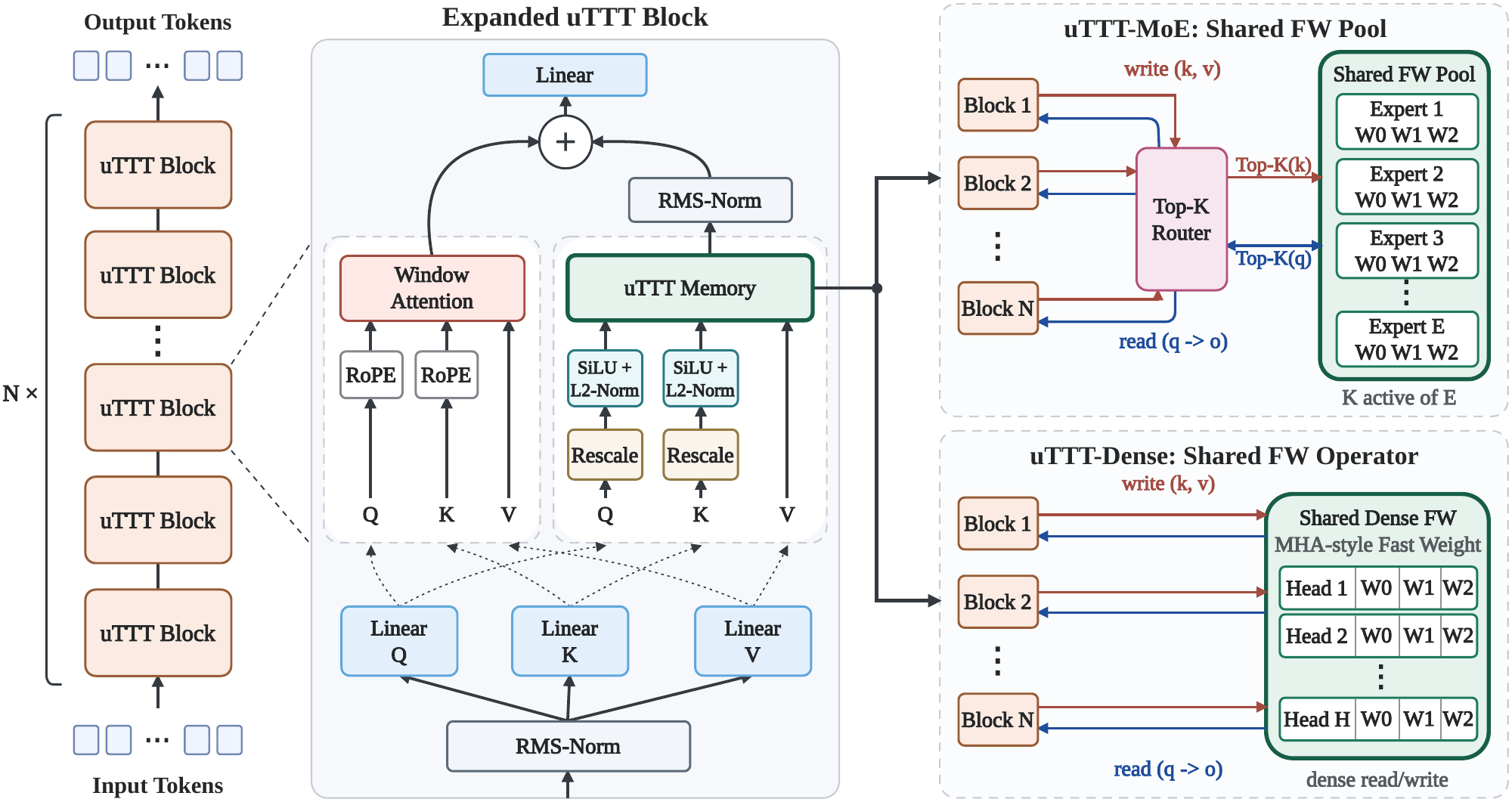
Shared fast-weight memory across time and depth, for language modeling and novel-view synthesis. At matched state and active compute, uTTT-MoE gains 2.6 and 2.1 RULER points over layer-private TTT-MoE at 124M and 760M.
I am a Ph.D. student in Computer Science at the University of Wisconsin–Madison, advised by Junjie Hu.
I work on how a long-context model should hold on to what it has read. Attention keeps everything and pays for it; recurrent and fast-weight models compress and forget. Almost everything I do sits on that trade — what the memory is, how it is written, and how it is read back. I consider long context the most important open problem in LLMs.
My work runs in three lines:
Browse the Research directory for individual project pages with methods, results and paper figures.
Shared fast-weight memory across time and depth, for language modeling and novel-view synthesis. At matched state and active compute, uTTT-MoE gains 2.6 and 2.1 RULER points over layer-private TTT-MoE at 124M and 760M.
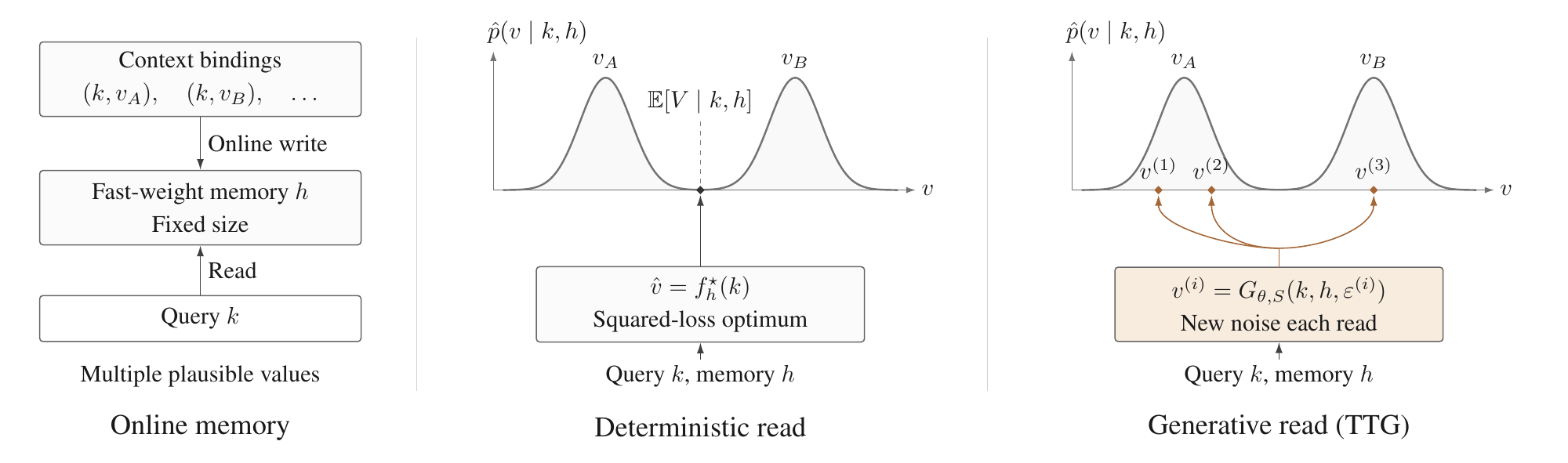
Generate each memory read from fresh noise, guided by a query. TTG improves average retrieval and novel-view reconstruction over the tested fast-weight baselines, and repeated reads recover alternative values in a controlled memory test.
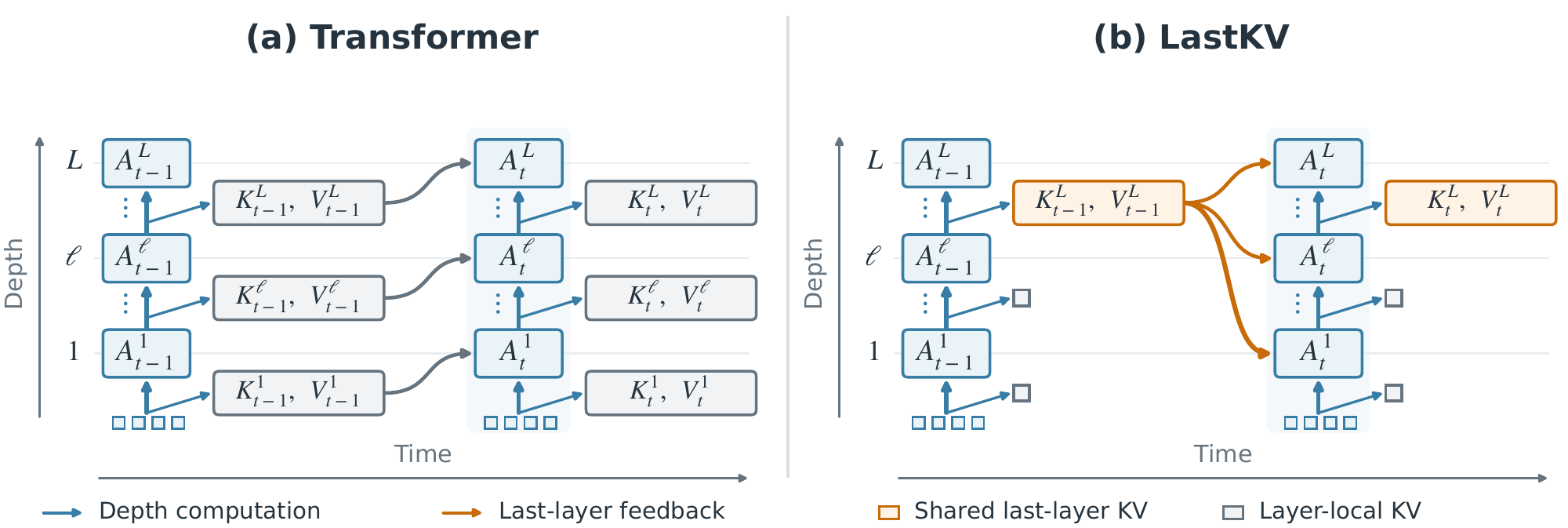
Let every layer read a shared last-layer KV history, feeding deep past representations back into future computation. Chunked processing preserves parallel attention within each chunk and reduces long-term KV storage toward 1/L of a standard L-layer Transformer.
Comparing the Apple and LLM value chains through financial filings, official disclosures, and interviews: from chips, manufacturing, and cloud to data startups in Silicon Valley and Beijing and UniPat’s approach to tasks and evaluation, with a focus on profits, capital investment, and customer dependence.
Frontier physics has long required mathematics, instruments, and large collaborations to make sense of the world. Frontier AI is raising a similar question: when capabilities grow faster than our understanding, how do we check reasoning we can no longer follow from beginning to end?
Why can parallel prefill, token-by-token recurrent rollout, and fully parallel policy replay define different policies? A look at LastKV’s fixed chunk recurrence through probability and gradient consistency in RL.
From Score Centering, BPO, and MaxRL to Self Forcing, video preference optimization, and KV quantization correction: understanding drift across domains through distributions, feedback loops, and points of intervention.